Wat de olifanten en het werk met de lokale gemeenschap mij hebben geleerd: een blog door Antonio Perdomo
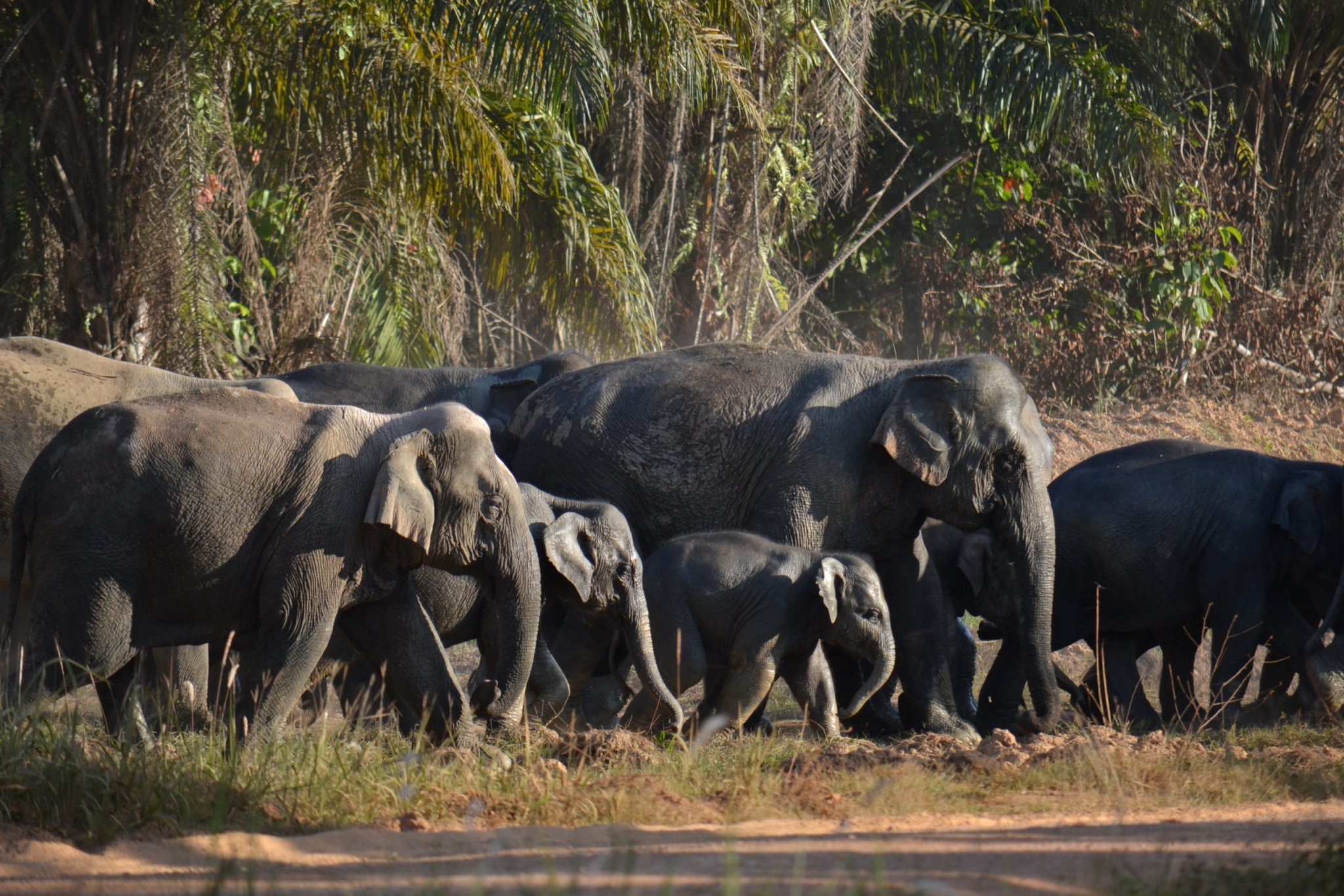
In oktober 2026 sloot Antonio zich aan bij het team van Bring The Elephant Home in het Thaise dorp Ruam Thai. Daar deed hij intensief mee aan onderzoek naar olifanten en hun bescherming. Van het observeren van wilde olifantenkuddes tot het ontdekken van de uitdagingen waarmee lokale gemeenschappen te maken hebben: hij deed waardevolle inzichten op in de complexe relatie tussen mens en olifant. In deze blog deelt Antonio enkele van de onvergetelijke momenten die zijn tijd in Thailand zo bijzonder maakten (in het Engels).
My Time in Thailand
This October, I had the incredible opportunity to live an unforgettable experience. It has marked a before and after in my career, and almost in my life, because it opened my eyes to realities and passions I didn’t know existed. I was immensely lucky to work with the Bring The Elephant Home team in Thailand, in a full immersion into the day-to-day of research and conservation. And even so, I feel I only scratched the surface of everything they do: from elephant observation and camera trap data analysis, to environmental education workshops and initiatives supporting communities affected by human-elephant conflict.
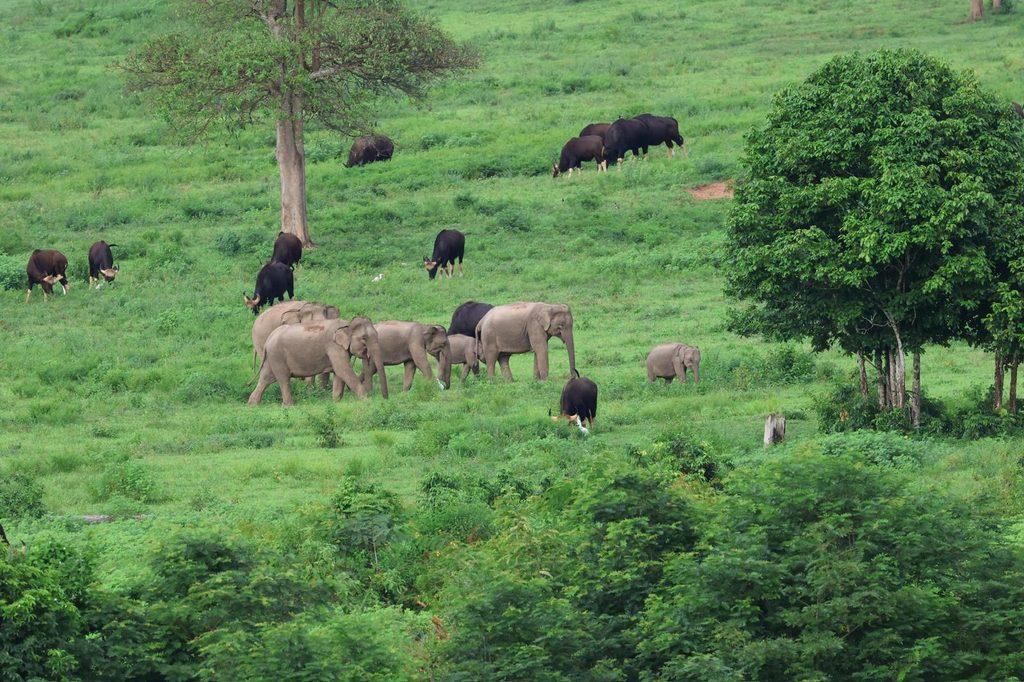
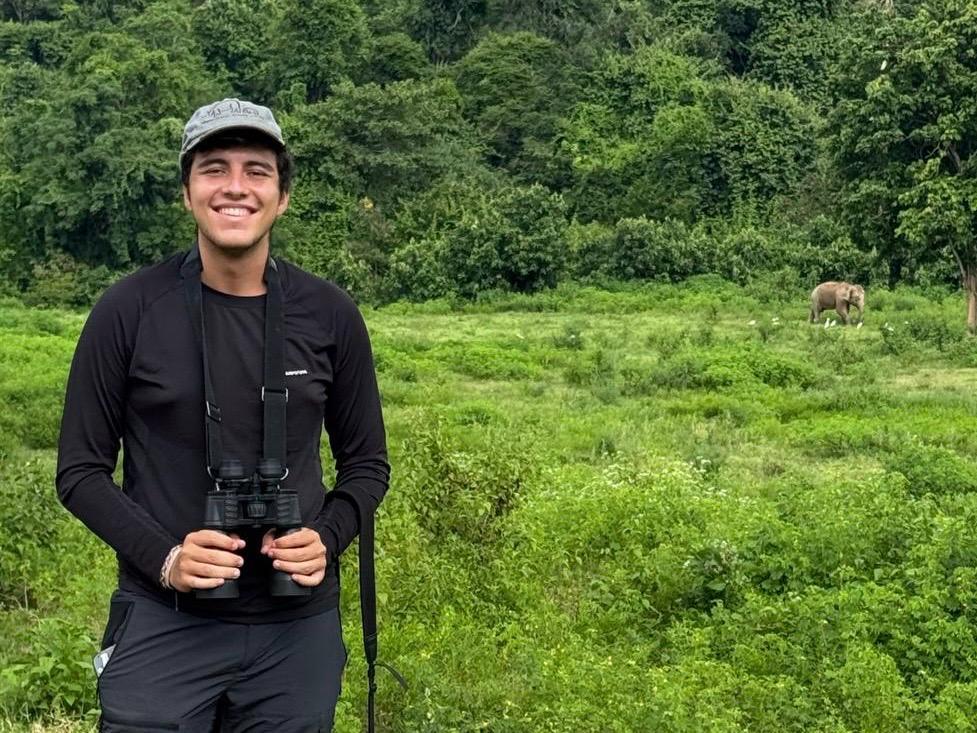
I went as a researcher and trainee, for a project on elephant behaviour, herd dynamics and their coexistence with people, a topic that is much needed for their conservation. My days had a beautiful rhythm. In the mornings, I worked in the office: reading papers, running models, sometimes preparing a Canarian snack for the team, laughing a lot and then a quick, mandatory stop for lunch at Corner. In the afternoons, I went out with Ave to observe the elephants. Herds of twenty or more, sometimes just a few steps away and sometimes more than 300 metres, always in complete freedom: caring for their calves, playing in the rain, feeding among the gaur, majestic in their wild state.
The First Day
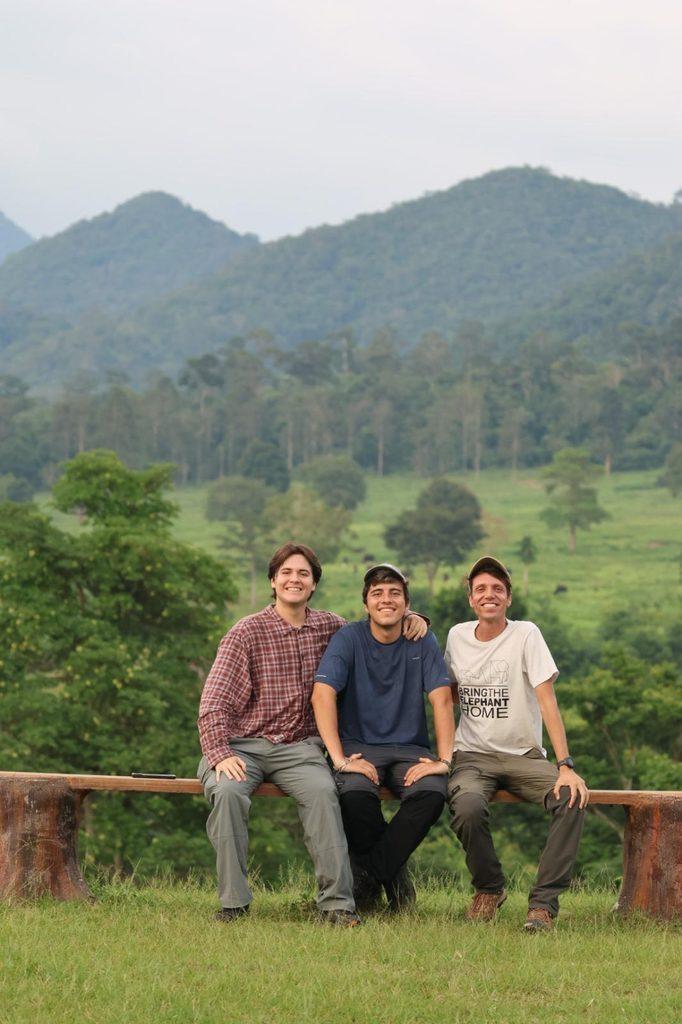
I remember the first day very well. Ave gave us an introduction to the history of Ruam Thai and the conflicts between humans and elephants, and then I joined Mo, Kie and Alonso to set up camera traps. Driving through mud, crossing rivers, and taking photos of ourselves to test the cameras made for a hilarious start.
Learning from Ave
Learning from Ave was a privilege. Not only in data collection, analysis, and animal behaviour, but also in their way of understanding elephants: they can recognise individuals at a glance by the subtlest features. I was also able to talk in depth with Ave about the ethics and cultural values behind conservation. Ave acts as a bridge between humans and elephants and listening to someone with so much knowledge, passion, and heart is a true pleasure.
The Day I Forgot My Phone
One of my most special memories comes from a mistake. One morning I rushed out the door to get to the office and head out on safari to collect data, and in my hurry I left my phone on my bedside table. When I arrived at the national park, I patted my pocket and realised. I was annoyed: I have the bad habit of carrying it everywhere and taking photos of everything.
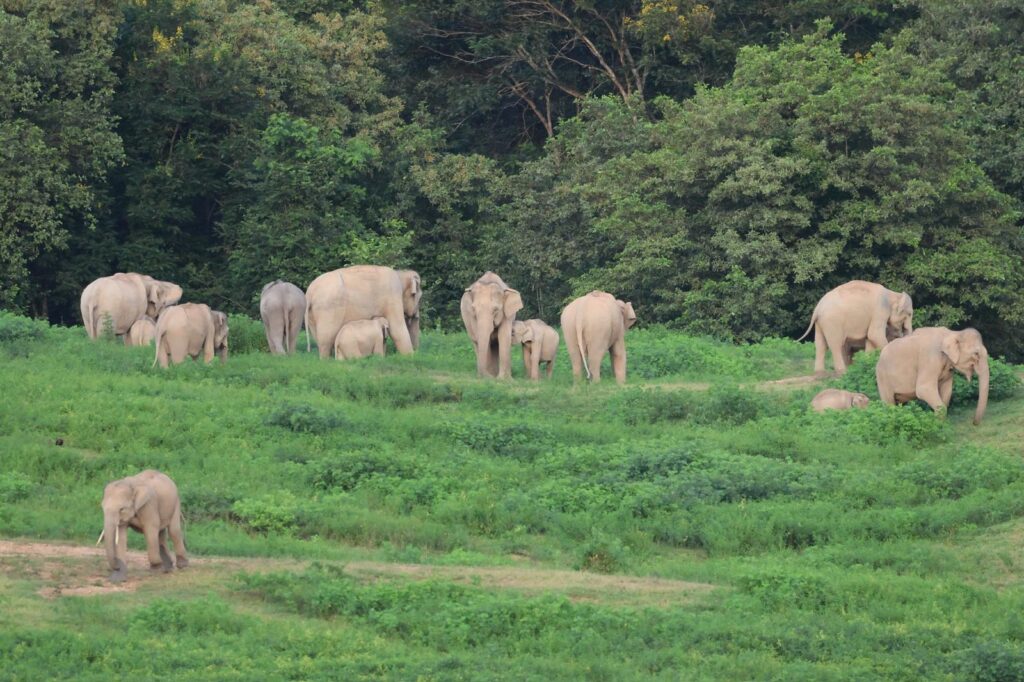
And that day was magical. Right from the start, we heard elephants very close by, calling to each other through the vegetation to gather: a sound that runs through your whole body, gives you goosebumps, and is absolutely overwhelming. Afterwards, I was able to collect data, fully focused on what they were doing. And on the way back, we stopped to watch a herd of 24 elephants, the largest we had seen so far, just 100 metres away, across a river. Mothers nursing their calves, young males interacting, unique social behaviours, the herd moving in a coordinated way. It was one of the most special moments of my life. And thanks to that mistake, I experienced it with my own senses and not through a screen, so the memory is engraved in my mind, completely pure.
The Farms and the Tom Yum Project
I also visited the farms and the workshop of the Tom Yum Project. Seeing first-hand the crops, and the methods and sacrifices farmers make to protect them and, ultimately, to survive, helped me better understand the other side of the conflict. And behind it all is a team of extraordinary women who show their community every day the benefits of coexistence: that it is possible to live and thrive alongside elephants. Everybody wins.
Africa and Asia
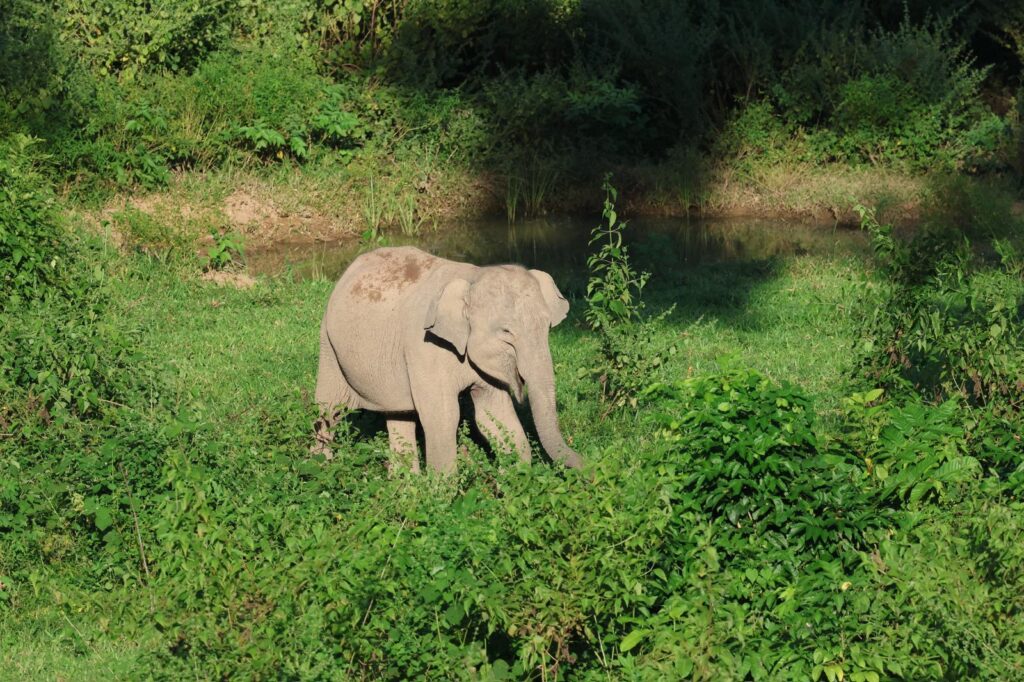
In recent years I have also researched and worked with African elephants in South Africa, and being able to compare both species is an incredible opportunity. African elephants are impressive at first sight: their huge size and enormous tusks give them an imposing presence. Asian elephants, on the other hand, impressed me with their noble character and the calm way they move through their world. Seeing both of them thrive in the environment where they have evolved over centuries gives me a clearer picture of the great elephant family.
And that brings me an awkward question everyone asks me: “Now that you’ve seen both, which do you prefer, African or Asian elephants?” Haha, ugh. The truth is, I don’t think we have to choose. Both species are majestic, intelligent, social, and sensitive, and I feel very lucky and proud to work with both and to fight for their conservation.
The Team
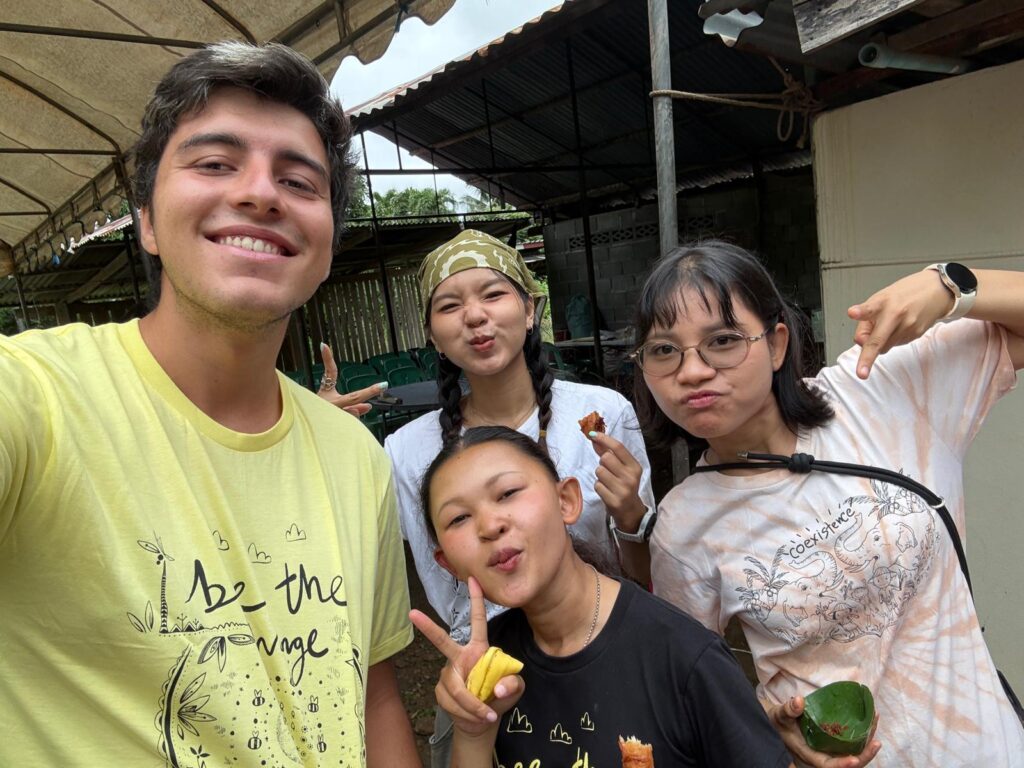
I have never met people so passionate and dedicated. The Bring The Elephant Home team works hard every day, convinced that what they do helps elephants, their society, and the world. And the atmosphere is extremely healthy and fun: there is space to focus, and also to sit down and talk, share a snack, or play a game. I believe this improves not only the team’s happiness, but also the quality of the work. It is an inclusive team built on respect and friendship, where everyone feels welcome and part of the family.
I remember my good-bye dinner at the office with a lot of nostalgia: the spiciest fish I’ve ever tried, dancing, laughing, and listening to music in Thai, English, and Spanish. I’m sad that I don’t know when I’ll be back, but very happy to have met such wonderful people, whom I’m sure I will see again soon.

Thank You, Ruam Thai
I am enormously grateful to the Ruam Thai community for welcoming me the way they did: for forgiving me for sometimes being too slow on the motorbike, or for not being able to say four words in a row in Thai and for teaching me so much. They opened their arms to me and made me feel not like a tourist, but like a friend. I will be back, eager to see everyone and to bring them more gofio.
I return with more motivation than ever to keep researching and working for causes as noble and exciting as this one.
Thanks to Kie, Cream, Yok, Pi Bee, Mo, Antoinette, Alonso and, specially, Ave.
ขอบคุณมากครับ
Dank je wel, Antonio!
Grote dank aan Antonio voor het delen van zijn ervaringen en inzichten. We zijn dankbaar voor het enthousiasme, de nieuwsgierigheid en de passie waarmee hij ons team heeft versterkt!
‹ Terug naar vorige pagina